Episode Transcript
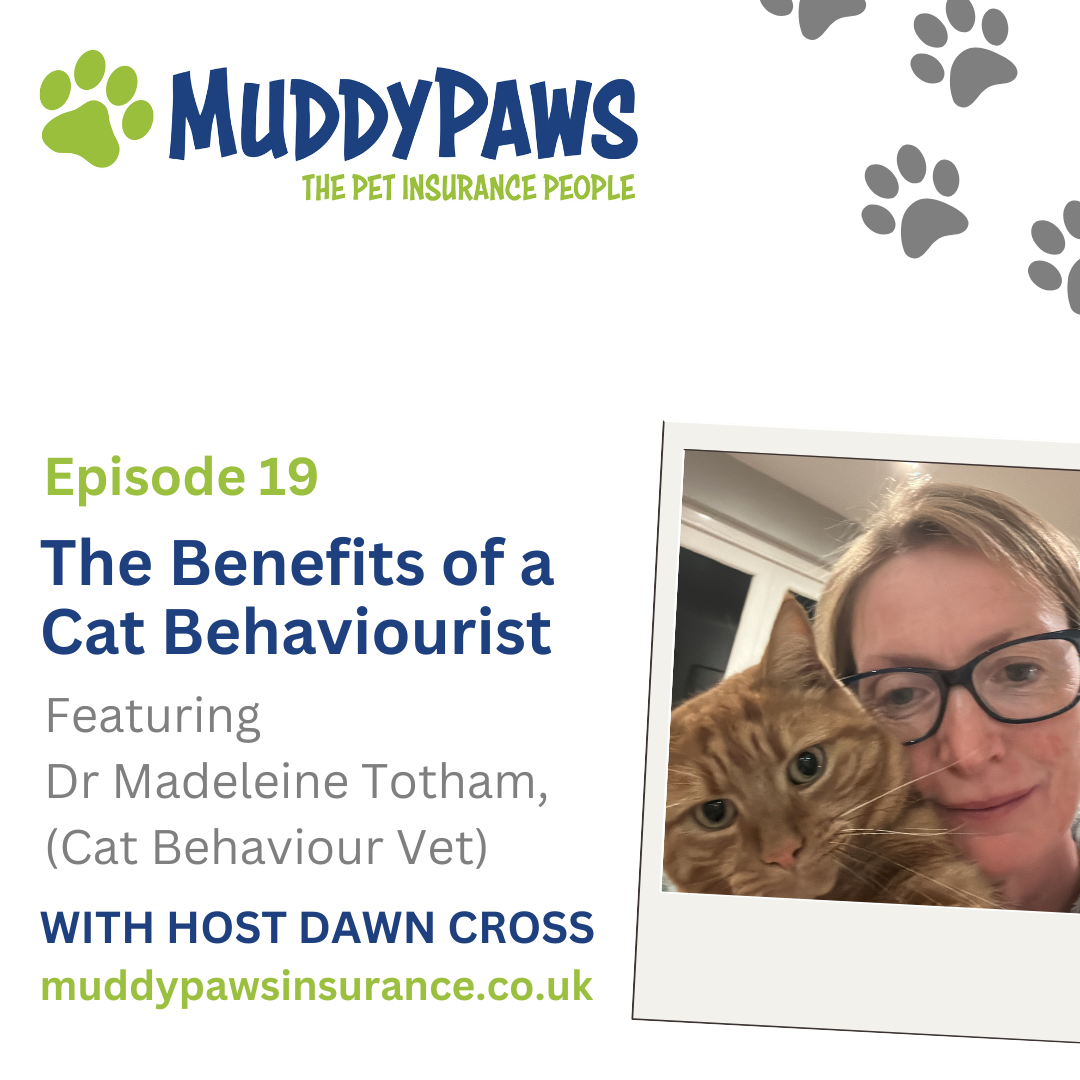
[00:00:01] Speaker A: Welcome to the Muddy Paws Insurance podcast. I'm your host, Dawn Cross, and today I'll be chatting about the benefits of a cat behavior list with Dr. Madeline Totham, the cat behavior vet.
If you enjoy our podcast, make sure to leave a rating on your favorite podcast directory.
[00:00:18] Speaker B: Well, welcome to the Muddy Paws podcast. If I could get you to start off with. Can you say your name and what you get up to with your work?
[00:00:26] Speaker C: Yeah, my name is Madeleine Tottenham and I am a vet and cat behaviorist.
[00:00:32] Speaker B: That's amazing. So what kind of things do you do within that? Because it may seem like really obvious to some people where it may not be that obvious to others.
[00:00:41] Speaker C: Yeah, so I've been a vet for about 14 years, something like that. And obviously, you know, with the vet side of things, I'm dealing with the physical health and I just kind of got to the point point where I felt like, you know, lots of the patients that I see, it's not just about the physical health that actually the mental health is impacting. I wanted to try and kind of bring those two things together, which is why I decided to train in the behavior as well. So that means that when I get cats coming in, for example, some cats that have like bladder issues, so cats can get blocked bladders and things like that. So that can be caused by a behavioral issue in the background. And I think we're really good at getting the cat in and treating the problem and unblocking it and sending it home. And then six months later it comes in again because we haven't actually addressed the stress in the household.
The cat's gone home and it doesn't like the other cat and the other cat's in its face or, you know, it doesn't like where the litter tray is. So it's really about trying to bring everything together and trying to figure out the kind of the stress in the home and using that together with the medical history to make the cat's life better.
[00:01:56] Speaker B: Definitely. I agree. I think we forget that all animals as well do pick up on stressors in the household or out and about. Same as us. You can cure all the physical ailments, but if you're not happy because of something, it's going to have a knock on effect onto your physical health.
Which brings me brilliantly to my next question is, you know, so why do we need to pay attention to our cat's behaviors?
[00:02:21] Speaker C: So I think that looking at the cat's behavior basically tells us if that cat's okay, you know, if our cat is really Happy. And a cat is eating normally. And a cat comes in every morning with its tail up and it's purring and it's really pleased to see us, and, you know, it's playing, then we know that that cat's a kind of happy, healthy cat.
Whereas if, if we are, you know, vigilant and we look at the cat and, you know, one morning, cat doesn't come in and see us and hasn't eaten his food that day. And actually we look a bit closer and think, actually their fur doesn't look great. You know, her furs come together and they're not grooming properly. And, you know, we can start to look at some of these things and start to think about, you know, what's going on here. You know, is there a medical problem, is there a behavioral problem? Or, you know, most likely there's a bit of both going on because obviously the two things aren't separate. So you can learn to kind of read our cat's body language, you know, look at their facial expressions, look at their body language, and use that to tell us, you know, does the cat feel happy? Does the cat feel stressed? Does the cat feel relaxed? Does the cat feel frustrated?
And, you know, once we learn to kind of read the cat's body language and we understand what emotions they're showing, then we can use that information to address those things and make. Make the cat's life better. So I think it's really important that we recognize the cat's behaviors because they give us an insight into how the cat's feeling and also what we can do after that to help them feel better 100%.
[00:03:53] Speaker B: I think as well that people tend to forget. Although cats operate very different to dogs, you know, their aloofness sometimes kind of just people are like, oh, well, you know, the cat's going to go do whatever. Just leave them to, like, they do want to interact with you, and they do exhibit behaviors that can be concerning. And if, obviously, if you're not paying attention to that, it then could lead to bigger issues, can't it? Like you're saying, as a vet, you've seen these issues come in.
[00:04:18] Speaker C: Yeah, I think that's definitely the case. And I think that's. That's really important, you know, that we're there and we know our cats. And, you know, sometimes people will bring their cat into the vet and they'll say, I don't know, there's just something off.
You know, they can't pinpoint it, but they know the cat, you know, your cat, the Best and you know, what's normal for it. So when, you know, that changes, then I think that that gives us a starting point that we need to look at.
[00:04:45] Speaker B: 100%. So I think brilliantly it goes on to our next question is, you know, what alarming behaviors are key to look out for? Because not everyone's going to know like what's going to be different or telltale, that there's a bigger issue at play.
[00:05:00] Speaker C: Yeah, definitely. So I think, like I said before, looking and thinking about any changes from normal behavior is really important. You know, changes and they can be a wide range of things. So they could demonstrate that there's stress or anxiety or illness. So I think the first thing is if you notice something wrong or a change or you're not happy about something, the first thing is to take your cat to the vet. We need to rule out underlying disease first because a lot of these problems can be caused by an underlying disease problem. So I always say to people, you know, the first thing you need to do, be seen by your vet, you know, and have those things ruled out or, you know, things that we need to look at further when we come to the behavior. And then I think in terms of the actual kind of signs that we need to look out for, the things like hiding away, sudden aggression, and that could be intercat aggression or aggression towards people, changes in appetite. So sometimes cats will go off their food, or sometimes they'll become ravenous over grooming or a lack of grooming, again, a change in their kind of social interaction. So maybe the cat becomes really clingy with you, wants to be with you all the time. Or again, the cat's hiding away, it doesn't want to be with you. You know, it's keeping itself to itself.
Increased vocalization is a really good one to look out for. So, you know, if the cat's suddenly meowing at you all the time, you know, it could be a sign of pain or, you know, other things. So that's something we should definitely take note of.
And then there's kind of more obvious things. So toileting around the house is kind of one that, you know, if they're not done it before, you know, we need to look into why they're doing that or destructive behavior. So suddenly they start scratching something or chewing something that they haven't done before.
And then there can be the more subtle things like altered kind of interactions. So are they just sleeping all the time?
Are they pacing around the house or they've stopped playing those kind of things. So changes from their normal routine, they can be very subtle or they can be really obvious.
[00:07:07] Speaker B: And it's interesting to note as well. Obviously you're saying it can swing both ways as well. So they could be more than their usual or less than their usual. And obviously it depends on how you've gotten used to the cat's kind of behaviour patterns. Depends on how you kind of gauge it when you.
[00:07:23] Speaker C: Yeah, definitely. And I think as a vet, I've kind of learned over the years that, you know, you need to listen to the owner because they, they really do know their cat best. And when, and when they come in and say this has changed or that's wrong and it might seem like a really small thing, but actually that can be the hook you need to kind of figure out what's going on.
[00:07:41] Speaker B: 100 and, you know, small indicator now could mean that you could catch something that could roll into like a bigger issue. Like, you know, for me, uti, it's like probably proper bigger infection at play as well.
[00:07:52] Speaker C: Yeah, definitely. And I think it's about tying all those things together, definitely.
[00:07:58] Speaker B: So obviously I think the big question today is, you know, how can a cat behavioralist like yourself be beneficial to pet parents? Because some people may not even think that it can be a useful thing for them or, you know, they may not have even come across someone like yourself. So, you know, why, why should they be coming to you, basically?
[00:08:18] Speaker C: So I think that a lot of cat behaviour is tolerated for a long time and I think often people don't, they either don't realise it's a problem or, yeah, they don't know what they can do about it to help. So sometimes I'll get people refer cases to me and it's like the cat's been toileting around the house how long for? And it's like a year and a half, two years. You know, people have been living with these problems for a really long time and they don't know what to do about it. And maybe they've gone to their vet and, you know, maybe their vet's been really helpful, but they haven't, they haven't managed to solve the problem for, you know, one reason or another.
So that's something that we can look into.
One of the things I found really difficult, you know, working in veterinary practice, or I still work in veterinary practice, is with behaviour is that you just don't have enough time. Behaviour is not quick fix and it's not something that you can just solve in a 15 minute consult. So often part of the problem is that people go to their vet and they might say their cats are toileting around the house and the vet might, you know, check their urine and rule out a UTI and give some suggestions around the house. But there's just not the time to be able to, you know, give the support that the owner needs. So that's something that I can do. Like my consults are 2 hours ish long. So we can really get into the nitty gritty of everything going on, you know, and then I can look at, you know, I'm being a vet as well. I can look at the background medical history, I can look at any test results that have gone on. Then we can talk about what's going on in the house.
What are the things that might be stressing the cat out? What are the triggers to this behavior?
Are all the cats needs being met? How can we meet those needs then?
A lot of it's about education as well, educating the owner. How can you achieve this?
You might need to make some changes in the environment which are going to help, you know, you might need to make some changes to how you interact with the cat that are going to help, you know, if every time you stroke the cat, the cat's tail is twitching and you ignore that, you know, that's a stressor that might be causing, you know, more problems. So again, you know, learning to understand body language and knowing what to do is really important.
Also just being able to rule out medical problems or help people to deal with the medical and the behavioral side of the problem as well, and then offering, you know, ideas what we can do. It's always very personalized. There isn't a kind of okay, do this, you know, it depends very much on what's going on for this individual cat in these individual circumstances.
And there might be training things that we do and all different changes that, you know, all brought together helps to improve the welfare of the cat. So that's the aim here. It's, it's to bring everything together and, you know, think about what we can do to improve the welfare of the cat.
[00:11:06] Speaker B: 100 and like you said as well, it does go hand in hand. So there could be like ongoing medical issues which then because they're stressed or in pain, they are going to start doing different things. They're usual because, you know, they're not a happy bunny. Like, you know. No, I think, you know, most of us, we act differently when we're in pain, don't we? We act more agitated and grumpy and, and cats and dogs have the same thing, don't they? So having that understanding on both sides of the coin, I think is really beneficial for helping them feel loved and hopefully, you know, get better and back to their usual selves.
[00:11:40] Speaker C: Yeah, I think so. I think that's really important.
[00:11:44] Speaker B: Definitely also have you here, actually. It'd be really awesome if we could discuss maybe. Obviously you don't have to name names or anybody, but maybe in an example that you've come across whilst you've been doing your work that you could explain to the audience because then it would help them understand how you function. Also then how it's beneficial to learn about these behaviours which then led to either a diagnosis or a happy ending.
[00:12:09] Speaker C: Yeah, sure.
Okay. I have a case of a lady who went on holiday to Greece and felt found a street cat that she fell in love with and fed the street cat and eventually brought the street cat home, which is brilliant. And, you know, the cat didn't have a home. And the cat also had some. Some health issues, had like a mobility issue.
And that was great, except the cat was absolutely terrified because the poor cat had never lived in a household before and she already had a resident cat in the house.
And yeah, she was not really coping at all in the environment.
So I went to the house, we did a full consult, we dealt with all the medical things and there were still some pain issues going on with this particular cat. So we dealt with those and we dealt with how to change the environment, how she could interact better with the cat, how the cat can interact with the other cat.
And that was about a year ago now. And the cat's doing amazingly now.
The cat is much more confident. You know, before she would hide all the time, she would only come out at night, eat her food, use the litter trait, and then she would go back, she interacts with the owner, she plays, you know, she's a confident cat now.
She's never going to be a lap cat. And I think that part of, you know, the process was to understand, for the owner to understand that, you know, there will always be limitations with this cat.
A lot of a cat's behavior and personality is decided when they're really young. So between two and seven weeks is a really important time for socialization.
So if the cat hasn't experienced lots of things between that time, then they're always going to find those things bit difficult. So, you know, the owner learned that, you know, these are the things that my cat feels happy with. This is the ways that I can interact with my cat. And yeah, the Cat's so much better now and, you know, much more confident and, and the owner's really happy. So, you know, that was a really good, good one.
[00:14:21] Speaker B: That sounds, it sounds like a really good success story as well. It's really pleasing to hear. Like, people are still helping rescue cats who may be feral or, you know, haven't had a home. But it also then, like you were saying, it helps them understand where they're coming from, especially if you're more. If it's more feral cat. My mum has a half feral cat so she's will cuddle you a little bit, but then she's kind of on the move again or she's going out hunting again. Like she'll always want to be out at night, which, yeah, we avoid because it's just silly because there's other like, you know, predators about.
But, you know, you need to understand almost like their backstory as well. So it's like, especially if you, you know, adopt a cat from a shelter, they've got previous experience with someone which may have been very different to yours, and they're not necessarily going to warm up or want to do the way things, things you want to do very quickly or maybe not at all.
[00:15:13] Speaker C: Yeah, I think that the background is a really important factor in almost all of the cases I see, you know, taking into consideration what happened early on in their life.
Even if it's not sort of something terrible that we deem terrible, it's a really important component of the behavioural plan.
[00:15:36] Speaker B: 100%. Well, is there anything else you'd like to add before we wrap up the episode today?
[00:15:42] Speaker C: Just a couple of things. So the first thing is just to say that all behaviourists are not equal. Behaviorist is not a protected title, so anyone can basically say I'm a cat behaviourist. So if you're looking. Or dog behaviourist. So if you're looking for a behaviourist, then I would really recommend that you check out the ABTC list and that is the Animal Behaviour and Training Council, and there is a list of basically all behaviourists who've taken proper qualifications and can help you and you can look for people in your area and what specific needs you have. So I think that's really important.
And then also consider what you need.
There aren't many cat behaviourists who are also vets. So if you have an issue that is a medical and a behavioural issue, then looking for someone like me who is both can be really helpful because I can look, as I said before, you know, all of the medical side of things and the behavioural side of things and sometimes that can help kind of crack what's going on.
So I have a website if I anybody would like to take a look and the website is catchbehaviourvet.com and that's got all my details and contacts on it. Anybody wants to look.
[00:16:52] Speaker B: That sounds brilliant. Well, thanks so much for coming on and sharing your experience today. It's been really insightful.
[00:16:58] Speaker C: No problem. Yeah, it's been great to talk to you and I hope everybody found it interesting.
[00:17:05] Speaker A: Thank you to my guest today, Madeline, for chatting about her amazing work as a cat behavioralist and how identifying your cat's behavior behavior changes are key. If you'd like to know more about her work or how to book a consultation, please click the link in the description.
I have been your host Dawn Cross and make sure to click follow for more episodes Moneypools takes pride in keeping things simple. Our goal is to provide a reliable insurance policy that's well delivered and gives you peace of mind. Intelligent underwriting, a user friendly application and outstanding customer service. Ensure we stand out from the crowd and provide the best for you, your furry friends.